
Usable Capacity (kWh)
A 5kWh or 10kWh battery may suit different household consumption patterns. Compare usable capacity against evening demand and available solar surplus, not simply the size of the solar array.
Store electricity generated by your solar panels and use it when your home needs it. Request a solar battery storage quote in Newcastle for a new installation or compatible existing system. Compare 5kWh and 10kWh options, understand the installation costs and find out whether storage is likely to improve your electricity savings. We provide solar battery storage installation and compatible retrofits for Newcastle homes and businesses.
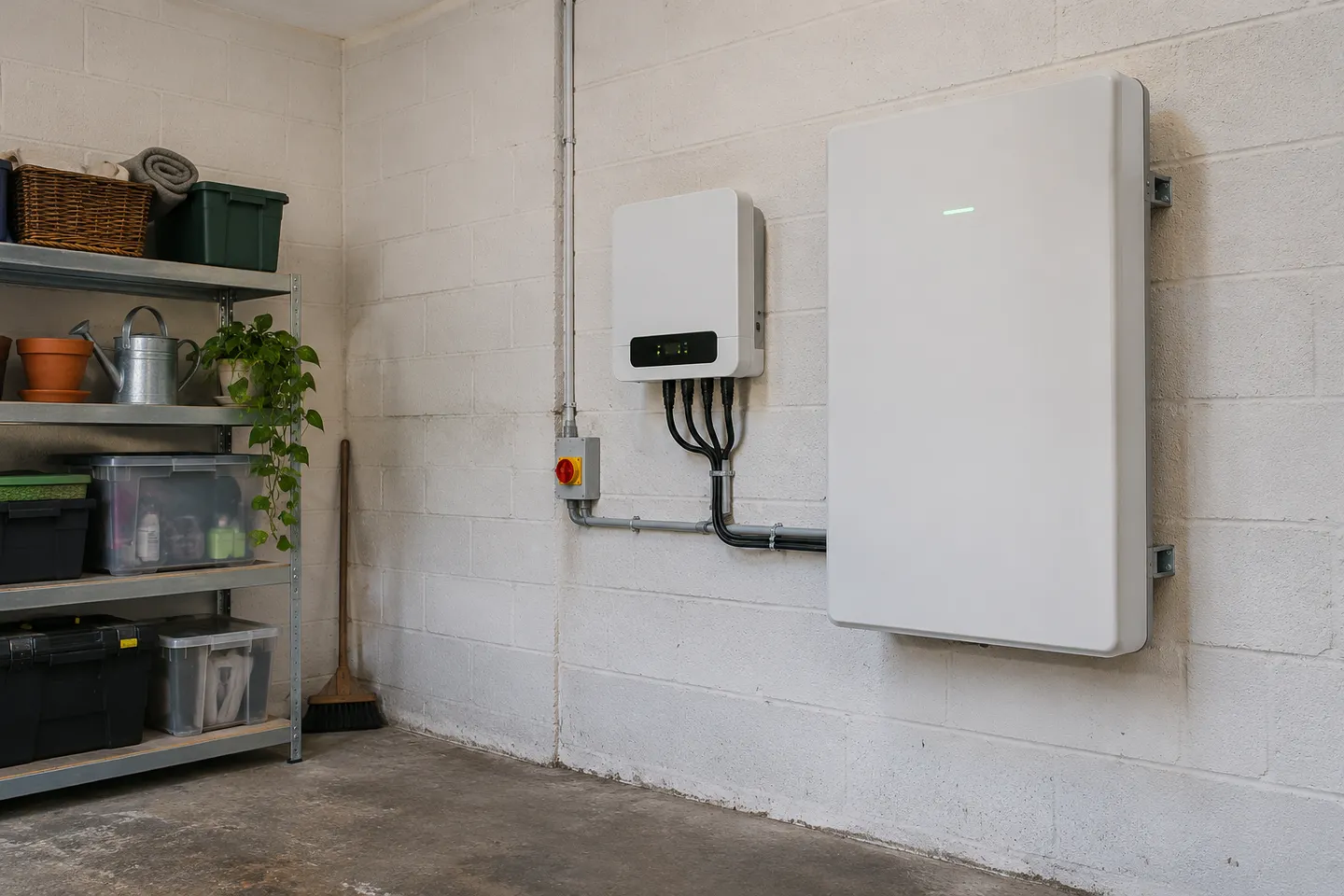
A 5kWh home battery system costs around £4,600 according to Energy Saving Trust. Larger batteries cost more, with the final price depending on storage capacity, inverter compatibility, electrical work and installation location.
A battery stores electricity in kilowatt-hours (kWh). A 5kWh battery can theoretically supply a 1kW electrical load for five hours, although usable capacity, conversion losses and discharge limits reduce the practical figure.
For a Newcastle household with a 4.5kWp solar panel system, storage can move some daytime generation into the evening. However, the financial benefit depends on the amount of spare electricity available and the difference between import and export tariff rates.
Existing solar installations may be able to use an AC-coupled battery system. New installations can also be designed around a compatible hybrid inverter. The correct option depends on existing equipment and the intended use. If you are also considering solar EV charging, we assess which load should receive spare generation first.
Under HMRC’s current VAT rules, qualifying residential battery installations benefit from 0% VAT until 31 March 2027. The relief can include eligible standalone and retrofit storage; it does not automatically cover every associated building alteration.
Battery placement also needs a fire-safety assessment: BSI’s PAS 63100:2024 guidance addresses domestic storage installations. An apparently convenient garage or cupboard is not automatically a suitable location.
Compare solar panel installation options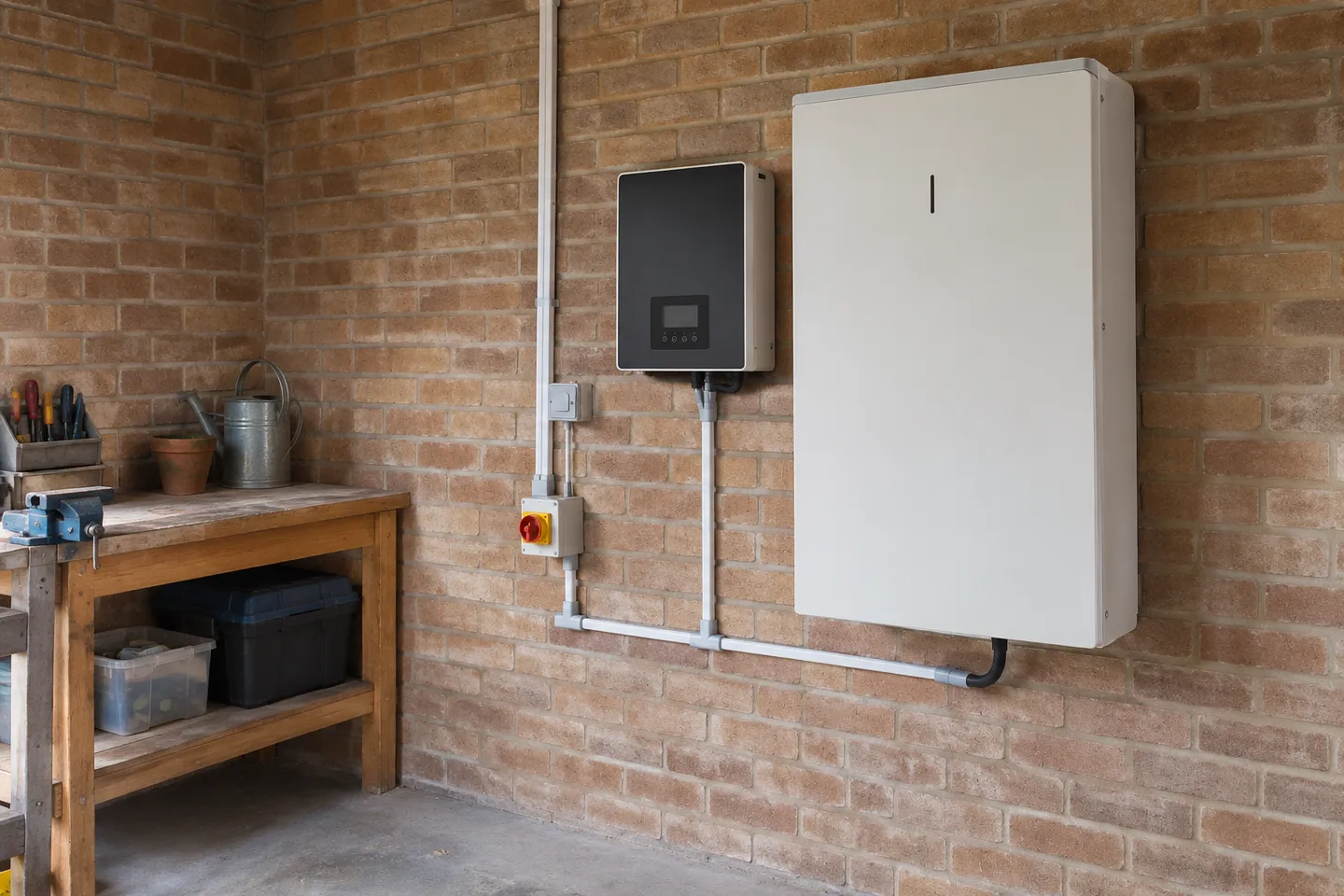
Battery capacity is only one part of the specification. The system also needs sufficient discharge power, compatible equipment and a safe installation location.
A 5kWh or 10kWh battery may suit different household consumption patterns. Compare usable capacity against evening demand and available solar surplus, not simply the size of the solar array.
Check whether the existing inverter supports storage or whether an additional battery inverter is required. AC-coupled and DC-coupled systems involve different equipment and installation costs.
Installation position affects temperature exposure, ventilation, access and fire safety. We assess siting against applicable electrical standards, manufacturer requirements and PAS 63100:2024, which addresses fire safety for domestic battery storage.
Capacity is measured in kWh; discharge power is measured in kW. A battery with 5kWh of usable capacity may not operate every high-demand appliance simultaneously. Power-cut backup needs separately specified, compatible equipment.
We assess electricity use, existing solar equipment and the installation location before choosing capacity and an inverter arrangement. Northern Powergrid serves much of the North East, including Newcastle. Depending on the combined inverter arrangement, G98 notification or G99 approval may apply; we check the appropriate route for the property. The process runs from property assessment and system specification to quotation, installation and commissioning.
Examine household electricity consumption, daytime solar generation, evening demand and import/export tariffs to estimate how much storage could be used.
Identify existing inverter equipment, available electrical capacity, installation space and safety requirements. Determine whether an AC-coupled or hybrid inverter arrangement is appropriate.
Install the battery, necessary inverter equipment, protection devices and monitoring controls. Complete electrical testing and applicable grid connection notification or approval.
Set up charging schedules and monitoring, test operation and explain the settings. Where backup is specified, verify the associated circuits and changeover equipment.
Energy Saving Trust gives around £4,600 for a 5kWh system. Extra inverter equipment, electrical work or a complex installation can increase the price. Request an itemised quote covering usable battery capacity, inverter, installation and commissioning.
Yes, many existing systems can be retrofitted. AC-coupled storage may work alongside your solar inverter; other arrangements require different equipment. Solar battery installation in Newcastle starts with checking inverter compatibility, monitoring and grid connection requirements.
Not automatically. Standard grid-connected systems normally shut down when the network fails. Backup requires suitable equipment, safe isolation from the grid and the right circuit configuration. Ask for backup capability to be specified and priced separately.
Energy Saving Trust gives a typical lifespan of around 10–12 years. Chemistry, cycling, temperature and operating conditions affect actual life. Compare the warranty, guaranteed remaining capacity and any limits on total energy throughput.
It can be where you regularly export daytime generation and import electricity in the evening. Compare avoided import costs against lost export income, battery losses and installation price. Our calculator assumes 26.11p/kWh imports and 18p/kWh exports: that is only an 8.11p difference before losses, so a high export tariff can weaken the case for storage.
No. Some home solar batteries in Newcastle can also charge from the grid to use off-peak tariff periods. Savings depend on the tariff difference, efficiency, consumption and system price; compare the whole tariff, including its peak rate.
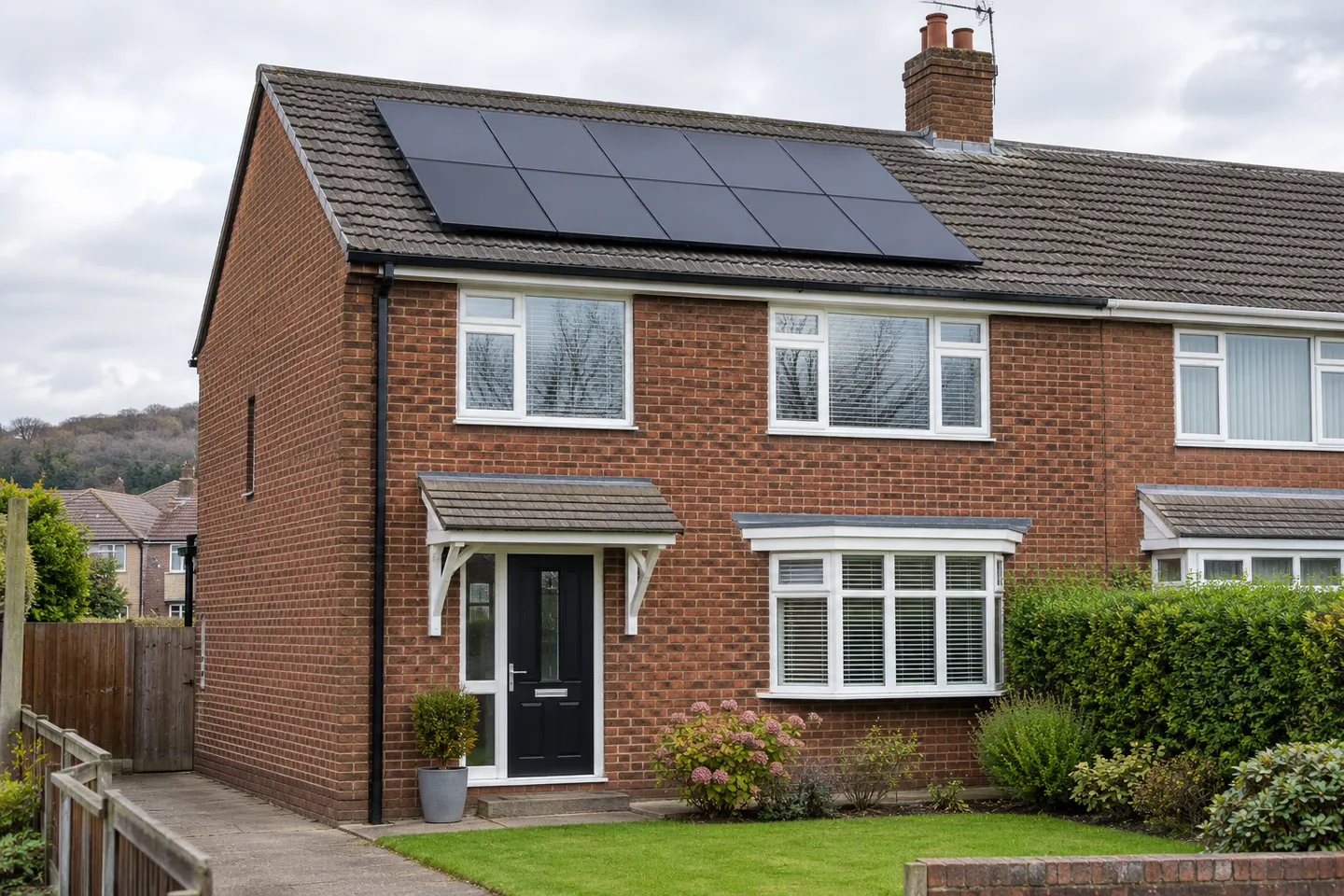
Already have solar panels or planning a new system? Tell us your current inverter model, approximate electricity usage and whether you want backup during power cuts. We use these details to assess your battery requirements and prepare a suitable specification.