Agricultural Solar Panels Newcastle: Put Your Farm Roof to Work

Agricultural solar panels in Newcastle’s rural service area can offset electricity for refrigeration, workshops and daily farm operations. We assess the building and the timing of demand before recommending capacity. Compare barn-roof PV with land-based alternatives across rural Northumberland and the wider Newcastle area. We provide agricultural solar panel installation for farms and rural businesses across Newcastle’s surrounding area.

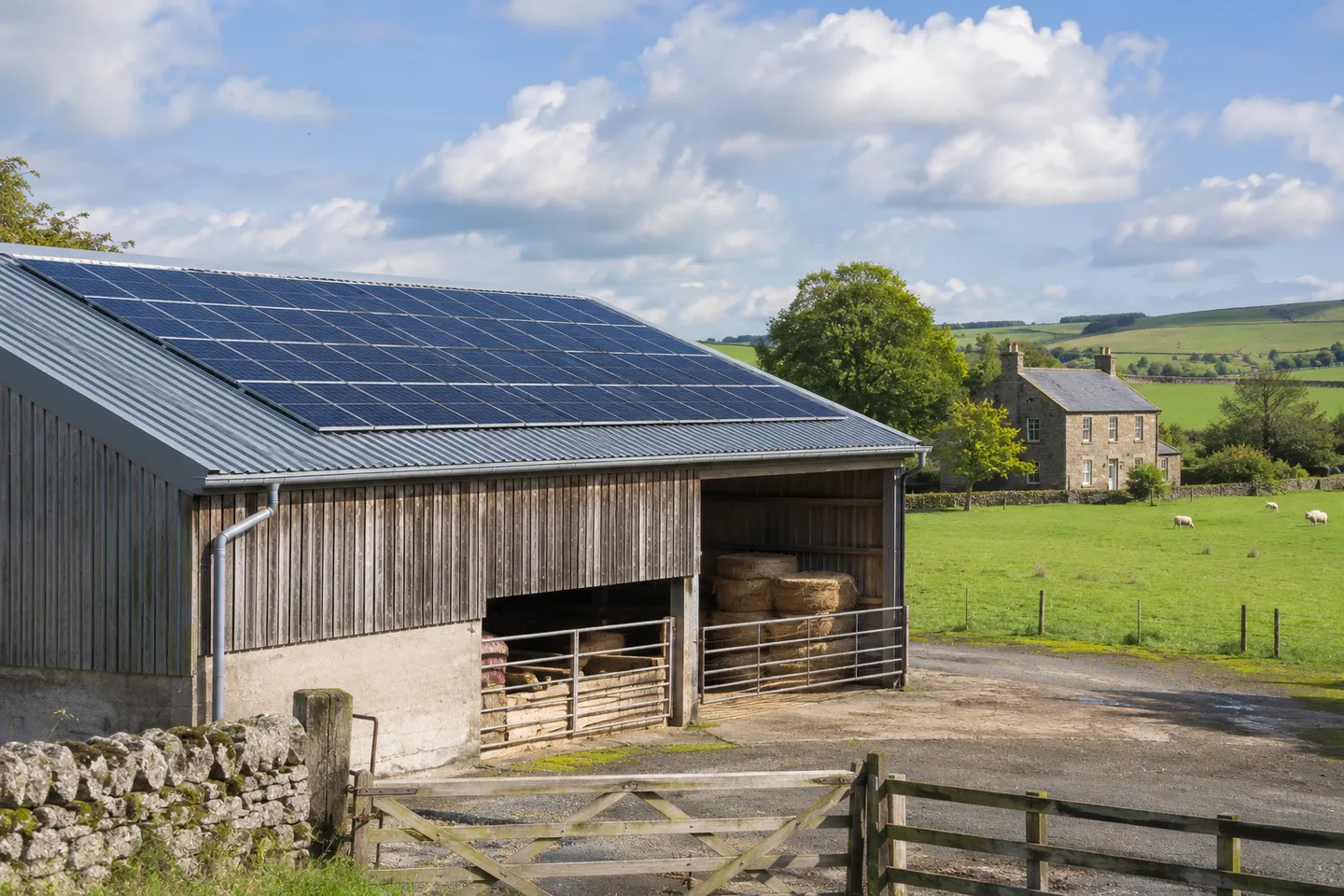
Illustrative agricultural solar panels installation; AI-generated design example

Size Farm Solar Around Refrigeration, Workshops and Daily Loads

A large barn roof does not automatically justify a large array. Refrigerated produce stores, dairy cooling and ventilation may provide useful daytime loads, while grain drying and workshop machinery can be seasonal or intermittent. We review meter records alongside the operating calendar before proposing farm solar panels in Newcastle’s rural service area.

Illustrative capacities of 30kWp, 60kWp and 100kWp produce approximately 25,740kWh, 51,480kWh and 85,800kWh/year at our 858kWh/kWp Newcastle reference yield. This uses the site’s conservative south-facing, 35° planning baseline with a 20% system-loss input; it is not a surveyed barn forecast. A shallow east–west roof, tree shade or a constrained connection needs its own PVGIS model.

For a demand example, a 3kW refrigeration load running for eight daytime hours consumes 24kWh. A 10kW workshop load running for two hours uses another 20kWh. These assumed loads total 44kWh, but generation must coincide with them: overnight cooling cannot be counted as direct daytime solar use. Nameplate power alone also overstates cycling equipment’s consumption.

Agricultural solar installation costs must include access, roof preparation, mounting, electrical equipment and grid work. For illustration only, a 60kWp budget at an assumed £900/kWp equals £54,000 excluding VAT, before separately priced roof replacement, asbestos work or network reinforcement. This is a budgeting calculation, not a supported market rate or a quote.

Solar panels for farm buildings use existing roof area; ground-mounted arrays need land, foundations, cable routes and a separate planning assessment. Compare our commercial PV guide for business consumption and investment assumptions. Non-domestic roof planning conditions and prior approval can apply to farm buildings; an agricultural use does not provide blanket permission.

Compare conventional rooftop solar installation
Illustrative agricultural solar panels installation; AI-generated design example

Four Checks Before Solar Goes on a Farm Building

Barn age, roof materials and rural electrical infrastructure can matter more than the available roof area.

01

Roof Structure & Remaining Life

Assess purlins, fixings, corrosion and the condition of the covering. The structural design must account for the array and local wind and snow loads; avoid fitting long-life equipment to a roof already due for replacement.

02

Asbestos & Fragile Sheets

Older cement-sheet roofs may contain asbestos and may be fragile. Obtain a competent assessment and an appropriate asbestos survey before intrusive work. Any removal or remediation needs suitable specialists and its own priced scope.

03

Rural Supply & Export Limits

Confirm the supply phases, transformer and agreed import/export capacity. A large barn can have a limited rural connection. G99 approval, reinforcement costs or an export limit may determine viable system size.

04

Operations, Access & Contamination

Plan around machinery movements, livestock, dust, washdown and harvest activity. Keep rooflights and maintenance routes clear, and select equipment locations suitable for the agricultural environment.

A Farm PV Programme That Fits the Agricultural Calendar

We coordinate agricultural solar panels in Newcastle’s wider rural area around building condition, seasonal operations and the connection offer before setting an installation date. The process runs from property assessment and system specification to quotation, installation and commissioning.

  1. 01

    Map Demand Across the Year

    Separate refrigeration, pumping, workshop and seasonal machinery demand. Review actual meter data rather than assuming all farm electricity is used when solar is generating.

  2. 02

    Assess Buildings and Land

    Review structure, asbestos information, fragile surfaces and equipment access. Compare sound roofs with suitable land where roof refurbishment would dominate the budget.

  3. 03

    Resolve Planning and Grid Scope

    Confirm the council’s planning route and the network operator’s requirements. Establish approved inverter output, export limits and any reinforcement before finalising the array.

  4. 04

    Install, Test and Handover

    Schedule works away from critical farm activity. Commission protection and monitoring, record the agreed export settings and explain how seasonal consumption affects results.

Farm Solar Questions: Roof Safety, Costs and Rural Connections

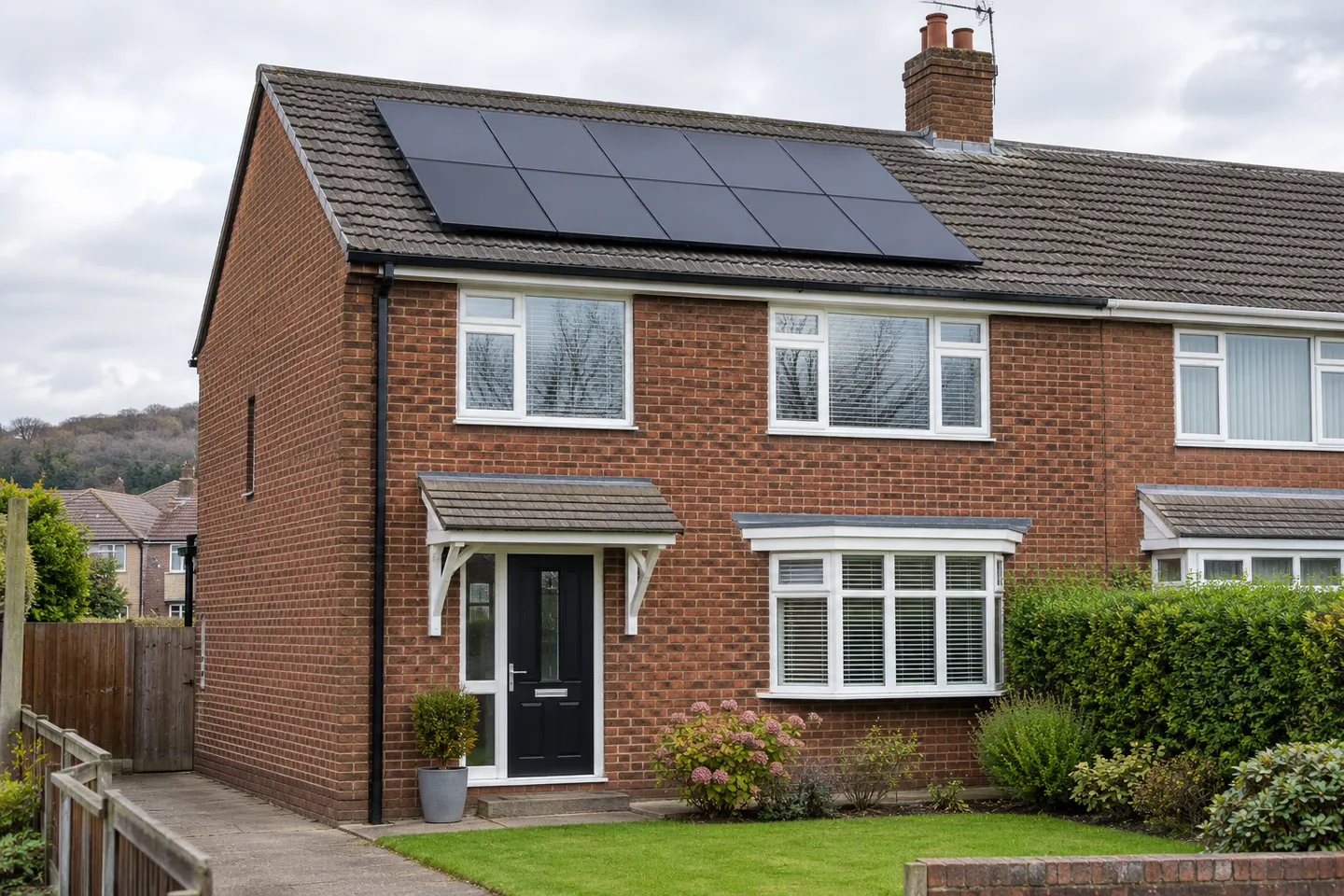
Illustrative domestic roof with neatly arranged solar panels

Get an Agricultural Solar Quote for Your Farm

Tell us the farm postcode, building age and covering, annual electricity use and main daytime loads. Include any roof survey, asbestos information and supply details so we can identify the practical next steps.