
Supply & Load Balancing
Check the service fuse, earthing, existing maximum demand and consumer unit. Dynamic load management can reduce charger demand when other appliances are running, within a properly designed installation.
EV charger installation in Newcastle lets you schedule home charging around your routine and potentially cheaper tariffs. We assess your parking, electrical supply and vehicle before specifying a charger. Compare 7kW and 7.4kW home units with three-phase options where the supply and car can use them. We provide EV charger installation for homes and businesses across Newcastle and Tyneside.
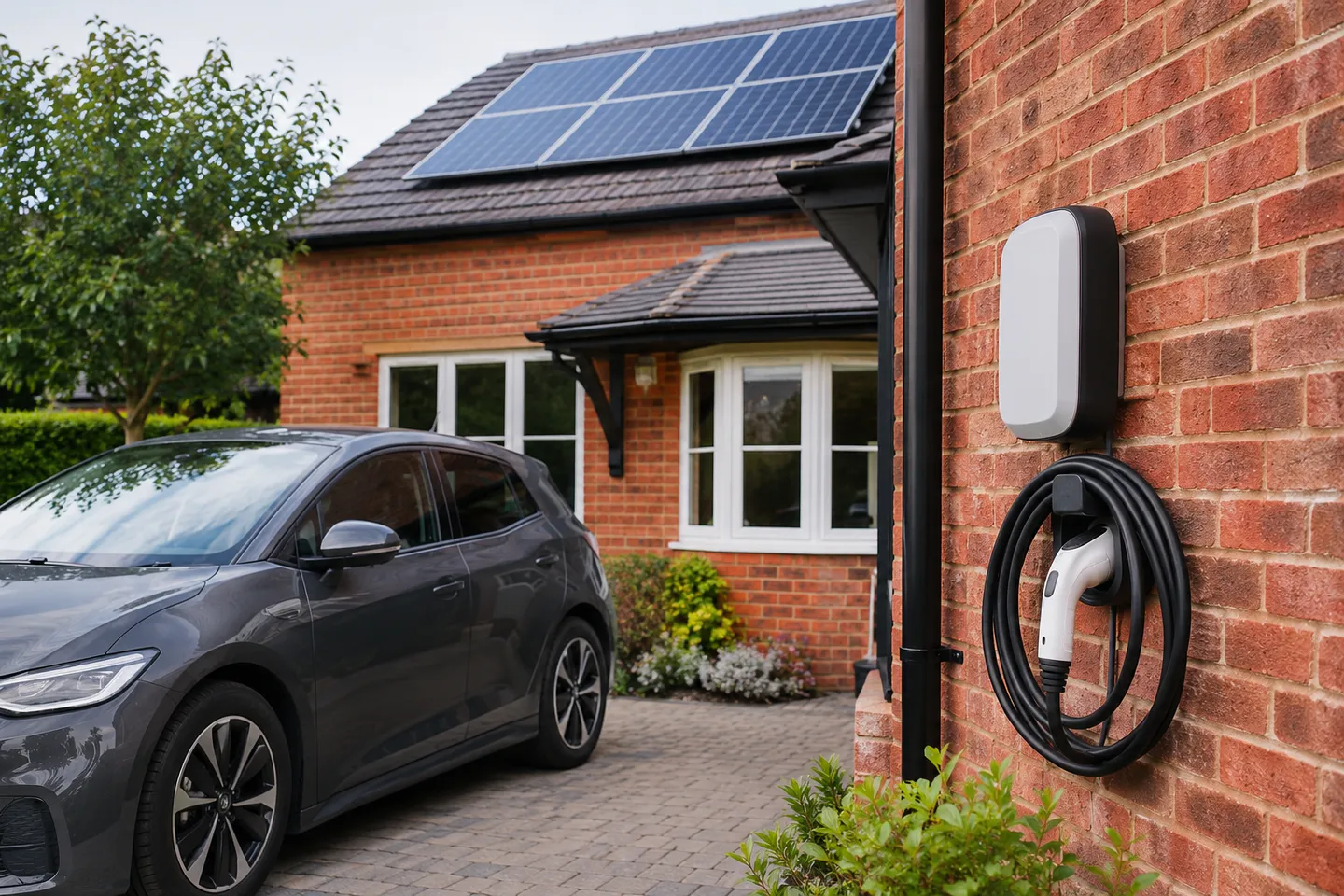
For a current UK price reference, Ohme quotes standard installed prices starting from £949 for its ePod and £999 for its Home Pro. These are manufacturer examples, not our prices or a universal installation cost. Long cable runs, trenching, a post, board work or supply alterations can increase the quote; confirm VAT and exclusions.
A 7.4kW single-phase charger takes a theoretical 8.1 hours to add 60kWh: 60 ÷ 7.4. Adding 50kWh takes about 6.8 hours. At 7kW, 60kWh takes about 8.6 hours. Real sessions take longer because of losses, vehicle behaviour and any power reduction. A normal top-up may add far less than a full battery’s capacity.
Three-phase 11kW and 22kW units need a suitable three-phase supply and a car that accepts that AC rate. A car limited to 7.4kW AC will not take 22kW from a 22kW AC charger. At an accepted 11kW, 60kWh theoretically takes 5.5 hours; at 22kW it takes 2.7 hours, before losses. The vehicle, charger and supply must all support the rate.
For an illustrative tariff comparison, 50kWh bought at an assumed 8p/kWh costs £4, versus £12.50 at an assumed 25p/kWh. These are example rates, not current tariff offers, and exclude charging losses. Compare the whole tariff, its off-peak window and household peak rate before choosing a home EV charger in Newcastle.
Solar EV charging in Newcastle works best when the car is parked during generation. A compatible charger can follow spare PV output, but cloud, minimum charging current and vehicle settings affect operation. We coordinate charging priorities with battery storage rather than counting the same solar electricity twice.
The current OZEV schemes include up to £500 for eligible renters and flat owners with private off-street parking, with schemes funded until 31 March 2027. A separate scheme covers qualifying households using an approved cross-pavement solution. Eligibility, permissions, vehicle and equipment conditions must be confirmed before purchase; a loose cable across the pavement is not an approved solution.
Explore solar panels for home chargingElectric car charger installation in Newcastle starts with the car and property, not the largest output printed on the charger.
Check the service fuse, earthing, existing maximum demand and consumer unit. Dynamic load management can reduce charger demand when other appliances are running, within a properly designed installation.
Confirm the car’s onboard AC charger limit as well as the wallbox output. A three-phase wallbox cannot create a three-phase supply or make a single-phase vehicle charge at 22kW.
For a standard home installation, establish lawful off-street parking, ownership permissions and a safe cable route. Check cable reach without creating trip hazards or relying on an extension lead.
Compare scheduling, tariff and vehicle compatibility, connectivity and software support. Specify solar-surplus control and battery coordination where needed; “smart” does not automatically mean solar-compatible.
We assess EV charger installation in Newcastle against the property’s supply and applicable electrical requirements, including the DNO’s notification or prior-approval route. The process runs from property assessment and system specification to quotation, installation and commissioning.
Record the vehicle model, AC charging limit, usual parking position and daily mileage. Review landlord or freeholder permissions where relevant.
Assess earthing, bonding, service capacity, protection and the cable route. Determine whether the network operator must approve changes before connection or can be notified through the applicable process.
Fit the specified charger and dedicated circuit with appropriate protection. Complete testing and relevant electrical certification, including applicable building-regulations requirements.
Pair the charger with its controls, confirm a charging session and explain scheduling. Test any specified solar-surplus or load-balancing function and hand over operating information.
Ohme’s published standard-installation examples start at £949 for ePod and £999 for Home Pro. Your quote depends on the equipment, cable route and electrical work. Compare a complete installed price, VAT and exclusions rather than treating the unit-only price as the project total.
The theoretical time to add 60kWh is 60 ÷ 7.4, or about 8.1 hours. Losses and power reductions increase it. The actual energy needed depends on the starting charge level, usable battery capacity and target charge.
Only if the electrical supply, charger and vehicle all support 22kW three-phase AC charging. A car capped at 7.4kW AC remains capped at that rate. Many homes have a single-phase supply, so a supply upgrade would need separate assessment and pricing.
A solar-compatible charger can use available surplus while the car is plugged in. Output changes through the day and may need grid support. Specify how charging interacts with a home battery and whether the charger can prioritise surplus solar rather than simply using a timed schedule.
Eligible renters and resident flat owners may receive up to £500, subject to the current scheme’s vehicle, parking, equipment and permission conditions. Schemes are funded until 31 March 2027. There is no automatic grant for every homeowner; verify approval and installer eligibility before relying on funding.
A standard installation needs suitable off-street parking. Some households may qualify for an approved cross-pavement solution, subject to council permission and scheme conditions. Do not route a loose charging cable across a public footway; assess authorised alternatives or nearby public charging.
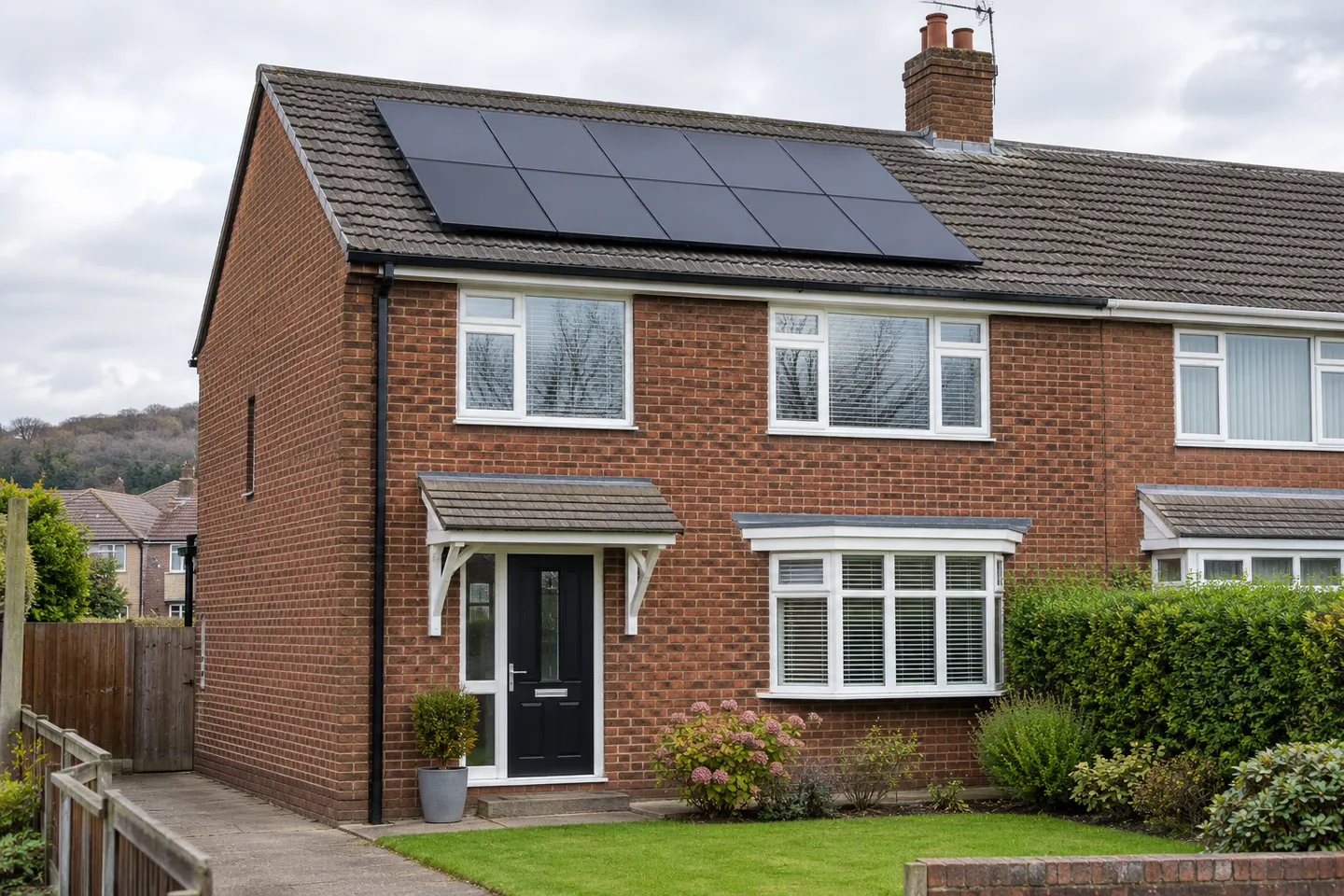
Tell us your vehicle model, parking position and preferred charging times. Include safe photographs of the meter, supply equipment and consumer unit so we can establish the survey and installation scope.