
Roof Loading & Condition
A structural assessment checks modules, mounting, wind and snow loads. Flat-roof ballast can add substantial weight; pitched-roof fixings need a sound structure and a compatible roof covering.
Commercial solar panels in Newcastle can reduce the electricity your business buys from the grid, particularly when you use power during daylight hours. We assess your meter data, roof and supply before sizing a system. Compare 20kWp, 50kWp and 100kWp options with a clear view of installed scope, forecast generation and financial return. We provide commercial solar panel installation for businesses across Newcastle and Tyneside.
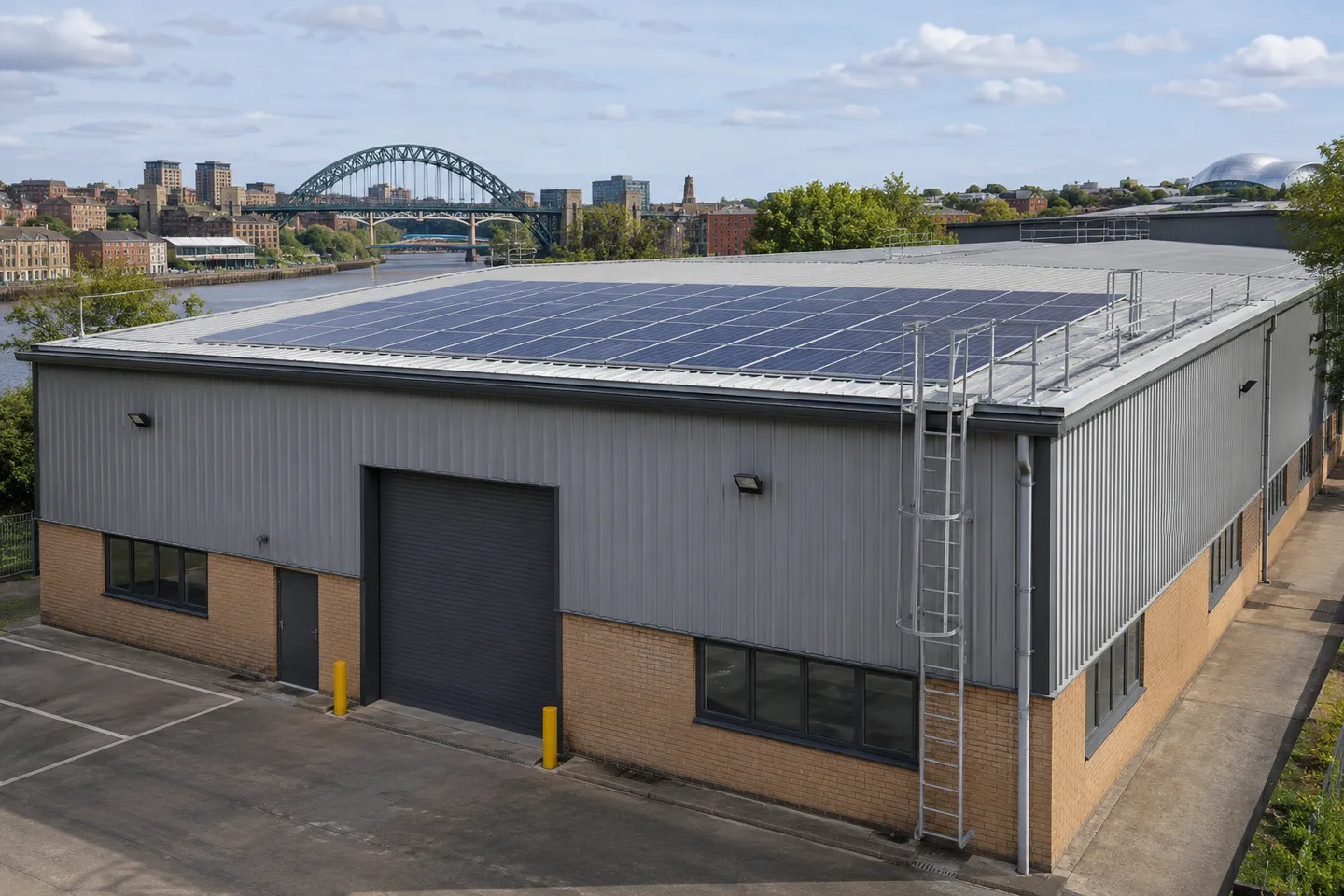
Commercial solar installation in Newcastle needs a site-specific price. Request separate costs for modules and inverters, mounting, access, structural work, electrical upgrades, grid connection and monitoring. A warehouse roof with straightforward access differs from an occupied office with restricted working hours.
For scale, our conservative reference yield is approximately 858kWh per installed kWp each year: 20kWp gives 17,160kWh, 50kWp gives 42,900kWh and 100kWp gives 85,800kWh. A PVGIS 5.3 calculation for central Newcastle gives 857.07kWh/kWp. We retain the site’s rounded 858 planning baseline: south-facing, 35° tilt, crystalline silicon, building-integrated thermal model, SARAH3 weather data and a 20% system-loss input. Nearby shading and a different roof or mounting arrangement need a fresh forecast.
Illustration, not a quotation: assume a 50kWp system costs £45,000 excluding VAT and generates 42,900kWh/year. At 80% direct consumption, 25p/kWh avoided imports and 8p/kWh exports, the gross annual benefit is £9,266.40: (34,320 × £0.25) + (8,580 × £0.08). Simple payback is about 4.9 years before maintenance, inverter replacement, degradation, finance and tax. Lower daytime use or a higher installed price lengthens it.
Solar panels for businesses in Newcastle, Gateshead and North Tyneside should follow working patterns. Manufacturing and refrigeration may absorb daytime generation; a storage warehouse with little machinery may export much more. Compare battery storage only after measuring the load, or ground-mounted solar where the roof is unsuitable.
For non-domestic roofs, Planning Portal’s England guidance sets siting limits and a prior-approval route for installations above microgeneration scale. Listed buildings and local restrictions need separate checks. Planning and the electricity connection are different approvals.
Read our solar installation guideWe establish the usable roof and electrical limits before treating the available square metres as an investment opportunity.
A structural assessment checks modules, mounting, wind and snow loads. Flat-roof ballast can add substantial weight; pitched-roof fixings need a sound structure and a compatible roof covering.
Flat roofs need row spacing, drainage and access routes; pitched roofs need suitable fixing zones. Keep rooflights, smoke vents and maintenance walkways clear rather than filling every roof surface.
A 50kWp DC array does not define its AC inverter output. We assess phase capacity and the combined generation arrangement. Commercial-scale inverters generally need G99 approval before connection; export limitations may form part of the offer.
Check the roof lease, landlord consent and remaining roof warranty. Half-hourly meter data reveals weekends, shutdowns and seasonal variation that annual bills conceal.
We plan commercial solar panels in Newcastle around safe site access, business continuity and the network connection, with responsibilities agreed before work starts. The process runs from property assessment and system specification to quotation, installation and commissioning.
Review half-hourly use, tariffs, opening hours and expected changes such as electrification, EV charging or a new production line.
Assess structure, roof condition, mounting and three-phase capacity. Confirm the network operator and submit the appropriate generation application, usually to Northern Powergrid in this area.
Provide a layout, generation forecast and consumption/export split. Identify permissions, roof repairs, connection works, outages and any exclusions from the price.
Agree access and isolation windows. Complete the installation, protection tests and commissioning, then hand over electrical documentation and monitoring to the site manager.
There is no reliable single price for every roof. Our £45,000 excluding VAT figure for 50kWp is a worked budgeting assumption, not a market average or offer. Obtain an itemised site quote and compare the cost per kWp only where access, roof and connection scope are equivalent.
At our 858kWh/kWp reference yield, approximately 85,800kWh a year. This is a long-term modelling example, not guaranteed output. Orientation, tilt, shading, clipping, downtime and export curtailment can change production.
It depends on the quote and avoided electricity purchases. Our 50kWp illustration produces about 4.9 years of simple payback before ongoing costs. Recalculate using your actual import rate, export offer, meter data and expected maintenance; simple payback is not an investment return forecast.
Some non-domestic roof installations meet permitted-development conditions; others need prior approval or a full application. Size, siting, heritage status and local restrictions matter. Confirm the route with the relevant council before works.
Potentially, subject to structural capacity, roof warranty and condition, fire access, drainage and wind design. Ballasted and mechanically fixed systems impose different requirements. Roof repairs may be better completed before PV is installed.
Only with the necessary owner and lease permissions. Agree access, insurance, maintenance, ownership at lease end and who receives savings or export income. A short lease may change the financial case even where the roof is suitable.
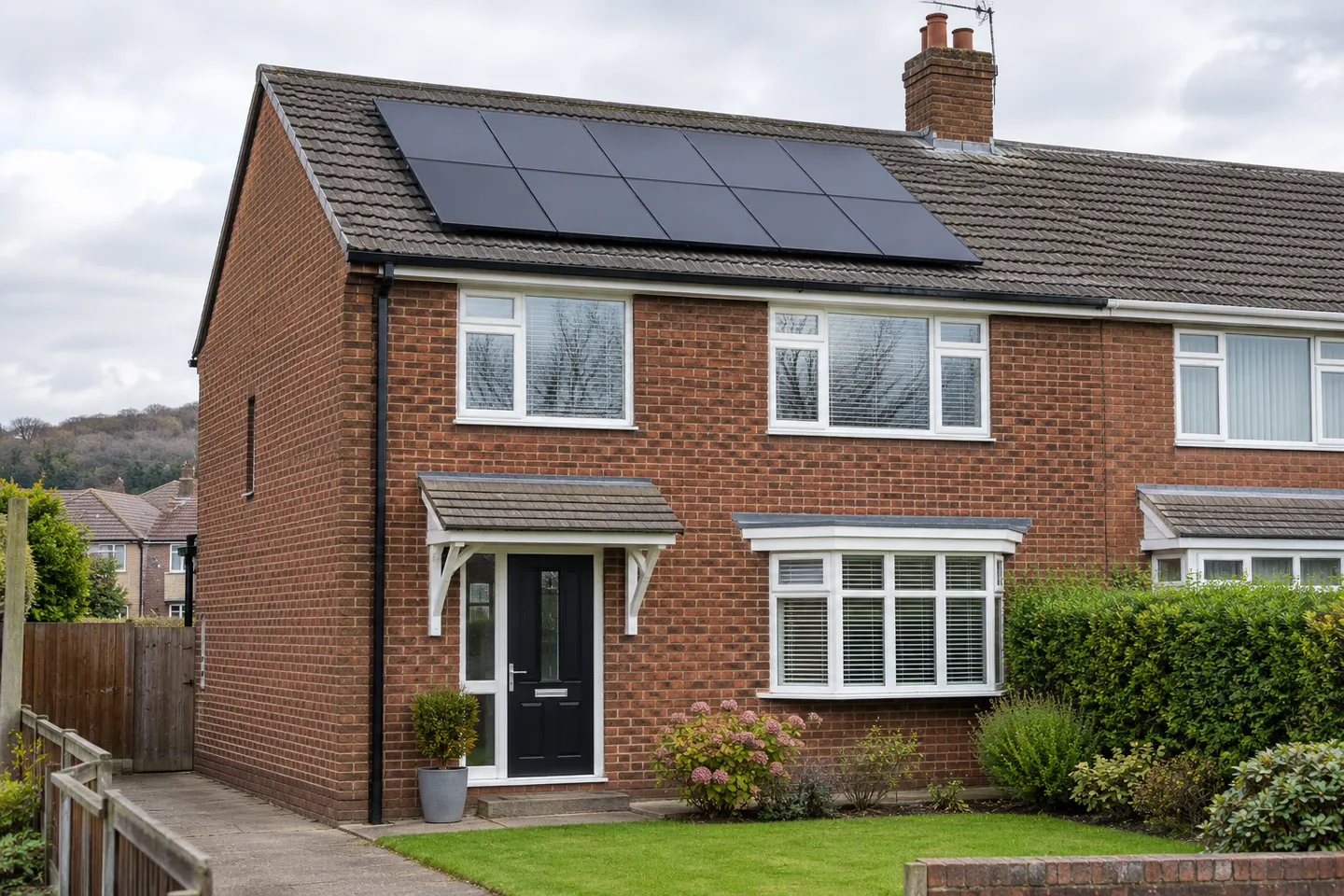
Send your site postcode, annual and half-hourly electricity use, roof details and ownership information. We can assess the surveys, generation model and connection checks needed for an itemised business proposal.